
Craftsmanship
Process & Material
An object is only as good as the material it's made from. Every piece is sourced with care and sculpted by hand to endure.
Two Leathers. Two Processes.
The Tanning ProcessChrome Tan
Most designer and luxury leather goods are tanned with chromium salts, a process measured in hours, not weeks. It produces a consistent color across every hide in a batch and holds up reliably at volume: a practical choice, not a compromise, and the standard for brands supplying at scale.
Vegetable Tan
Vegetable tan has grown rare: an estimated one in ten hides worldwide is tanned this way today. It carries a richness and tactile depth other processes can't replicate, and only grows more expressive with age: darkening, softening, and settling into a patina shaped by how it's worn. The process is slower: hides cure for weeks, sometimes months, in tannins drawn from bark, wood, and other plant matter, rather than a chemical bath. That extra time costs more, and PRNCE leans on the pricier leather for that character.
Chrome tan is not lesser. Vegetable tan is not superior. The two serve different purposes, different aesthetics, and different scales of production. PRNCE works in both, matched piece by piece to what a given design is meant to become.
Two processes. Two characters. Both in use.
The Material Curations
Core HidesFull-Grain
Left unaltered beneath the hair line, full-grain retains the hide's natural surface, character, and strength. The leather develops its own patina over a lifetime of use.
Top-Grain
The outermost surface of the hide is shaved to remove natural imperfections, leaving a uniform grain pattern. It holds a smoother, more consistent finish.
Suede
Cut from the underside of the hide, suede is buffed to a soft, short-nap finish. It drapes fluidly and adds texture and flexibility, well suited to interior linings.
No Compromise
Intentionally ExcludedTrue luxury is defined as much by what is intentionally excluded as by what is kept. Mass-production relies heavily on industrial shortcuts that compromise longevity and prioritize profits.
Genuine Leather
Despite its misleading name, 'Genuine' leather is a low-tier product made from the structural leftovers after upper layers are split away. It lacks natural grain, strength, and breathability, requiring heavy plastic polymer coatings and artificial embossing to mimic real texture. It degrades rapidly rather than aging.
Bonded Leather
Bonded leather is the particleboard of the leather world, made from shredded leather scraps, fiber pulp, and plastic bonding agents pressed together. It cracks, peels, and flakes under ordinary use.
Synthetics & Microsuede
Faux alternatives, micro-suede, and polyester or nylon linings. These petroleum-based textiles trap moisture, tear along seams, and can't be repaired. They don't age or patina, and they don't return to the earth the way leather does.
The Technique
Built for PermanenceThe Traditional Saddle Stitch
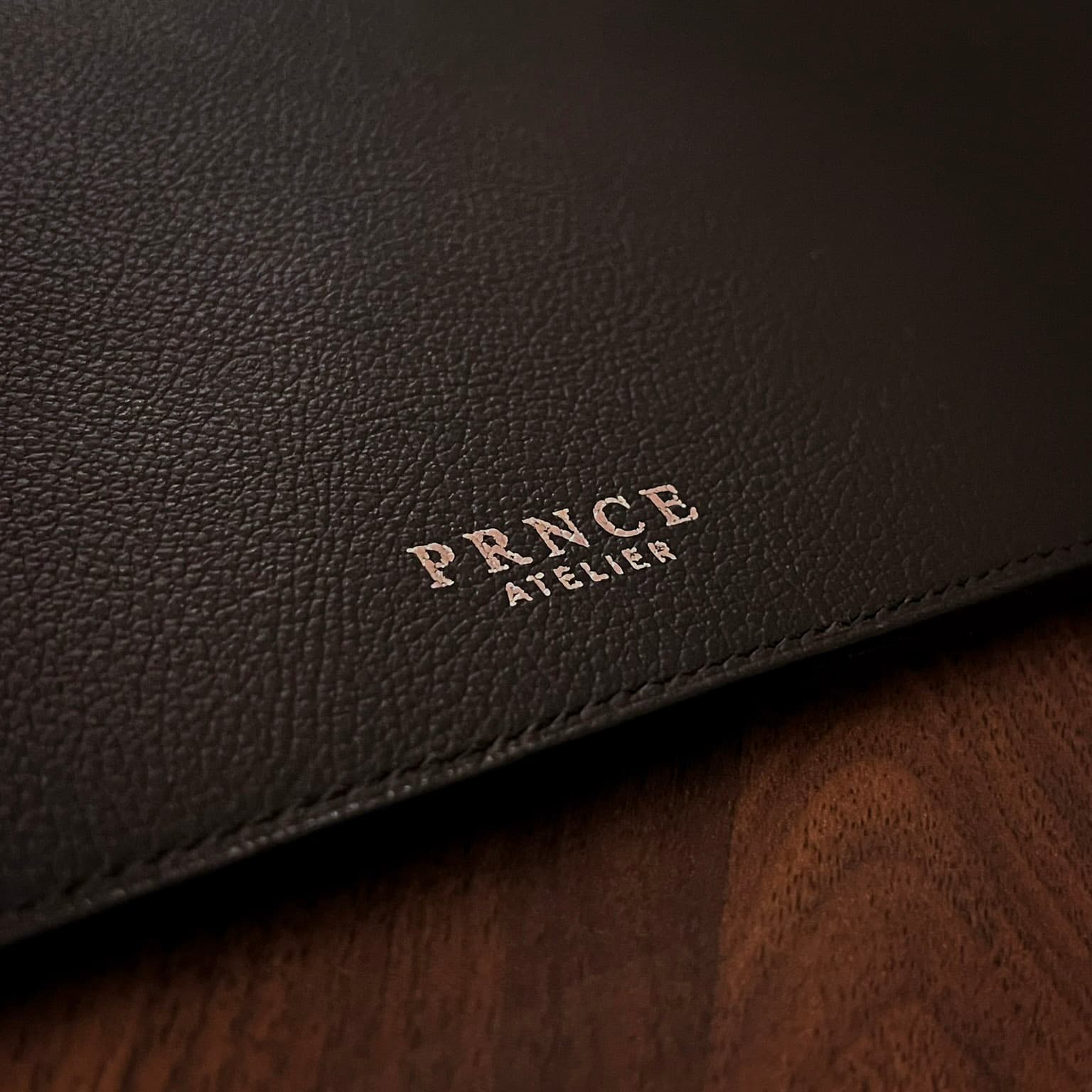
While modern machines prioritize speed, true structural integrity demands the human hand. The saddle stitch utilizes a single piece of wax-coated thread and two needles, threading them in an alternating, interlocking figure-eight pattern through every single hole.
This technique ensures that if a single thread ever wears through, the opposing thread locks the remaining seam firmly in place. It is a detail that cannot be replicated by a machine.
Material Consciousness
Responsible CreationLWG Protocols & Upcycling
Raw hides are fundamentally a natural byproduct of the food industry; the role of the atelier is to intercept this material and upcycle it into an object of permanence. Leathers are sourced exclusively from tanneries audited and certified by the Leather Working Group (LWG), guaranteeing traceable, responsible resource management.
Plastic-Free Integrity
Leather, reinforcement, hardware, and lining are each selected against the same standard: no synthetic material, no shortcut that outlives the piece it's part of. Every component is built to remain plastic-free and biodegradable.
Every piece begins as a conversation.
Begin a Commission→